
Why Energy Tech Startups Without ESG Won’t Raise a Series B Anymore
Feb 23, 2026
The Funding Gap No One Talks About
There’s a quiet revolution happening in climate tech investing. Not in the headlines about billion-dollar nuclear deals or AI-powered grid startups, but in the due diligence rooms where term sheets are either signed or shelved.
The shift is this: ESG readiness has moved from a nice-to-have to a dealbreaker. And the energy tech startups that don’t adapt are about to find themselves locked out of the capital they need to scale.
The Numbers Tell the Story
According to OECD data, nearly 30% of green startups secured funding in 2025, almost double the rate of their non-green peers. Climate tech venture and growth investment rose to $40.5 billion globally, with the energy vertical alone hitting $14.4 billion — a three-year high and a 31% year-over-year increase.
But here’s the paradox: while more capital than ever is flowing into the sector, deal counts fell 18% in 2025. Investors are writing fewer, larger checks — and they’re being far more selective about where those checks go.
The "spray and pray” era is over. Capital selectivity is the defining feature of the 2026 climate investment landscape.
What Investors Actually Want Now
I work with energy tech startups across Europe and the Middle East, and the pattern is consistent. The conversation with investors has fundamentally changed:
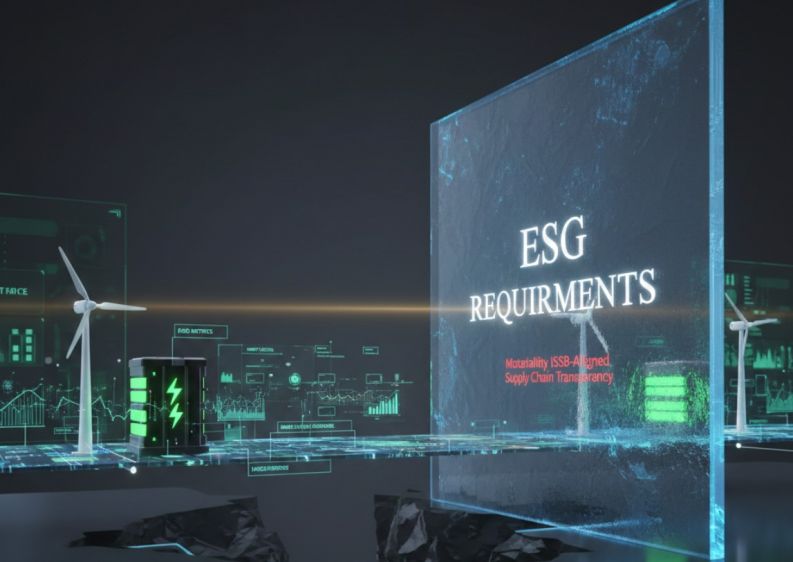
Materiality assessments before term sheets: Climate VCs like World Fund (€300M+ Fund I), HTGF, and SET Ventures are increasingly asking founders to demonstrate that they understand their own material ESG risks — not just their product’s climate benefit.
ISSB-aligned frameworks: With 40+ jurisdictions moving toward ISSB-standard sustainability reporting, investors want to see startups building reporting infrastructure early. It’s cheaper to build it at Series A than to retrofit at Series C.
Supply chain transparency: For hardware-heavy energy startups — batteries, solar panels, grid equipment — the EU’s Carbon Border Adjustment Mechanism (CBAM) makes supply chain emissions data a market access requirement, not just an investor expectation.
The Green Irony
Here’s what makes this particularly urgent: the startups building the greenest technologies often have the weakest ESG infrastructure. They’re founded by brilliant engineers who are laser-focused on solving hard technical problems — grid optimization, energy storage chemistry, hydrogen electrolysis — but who haven’t invested in the governance, social impact metrics, and supply chain documentation that investors now demand.
The result? They walk into fundraising meetings with a world-changing product and a blank space where their ESG strategy should be.
The Fractional ESG Officer: A New Model
The traditional solution — hiring a full-time Head of ESG — doesn’t make sense for a 20-person startup burning through its seed round. The Big Four consulting approach, at $200K+ per engagement, is equally impractical.
What works instead is what I call the "Fractional ESG Officer” model: on-demand access to senior ESG expertise that scales with the startup. An Investor-Ready ESG Package that costs less than a single month of a full-time hire, but delivers the materiality analysis, KPI framework, and reporting templates that investors actually want to see.
This is where platforms like Impact Maker come in — connecting energy startups with specialized ESG experts who understand both the regulatory landscape and the startup reality.
What to Do Now
If you’re an energy tech founder approaching your next fundraise, three things matter:
- Map your material ESG risks before investors ask. This isn’t about ticking boxes. It’s about understanding which sustainability factors could materially affect your business value.
- Build your reporting framework early. ISSB alignment isn’t optional anymore in 40+ jurisdictions. Starting now is dramatically cheaper than retrofitting later.
- Treat your supply chain as an ESG asset. Especially if you’re selling into the EU. CBAM, CSRD, and CSDDD are creating a world where supply chain transparency is table stakes for market access.
The energy transition needs $2+ trillion in annual investment. The capital is there. The question is whether your startup is ready to receive it.